The 10,000 BTC Pizza: $700 Million at $70,000 per Bitcoin
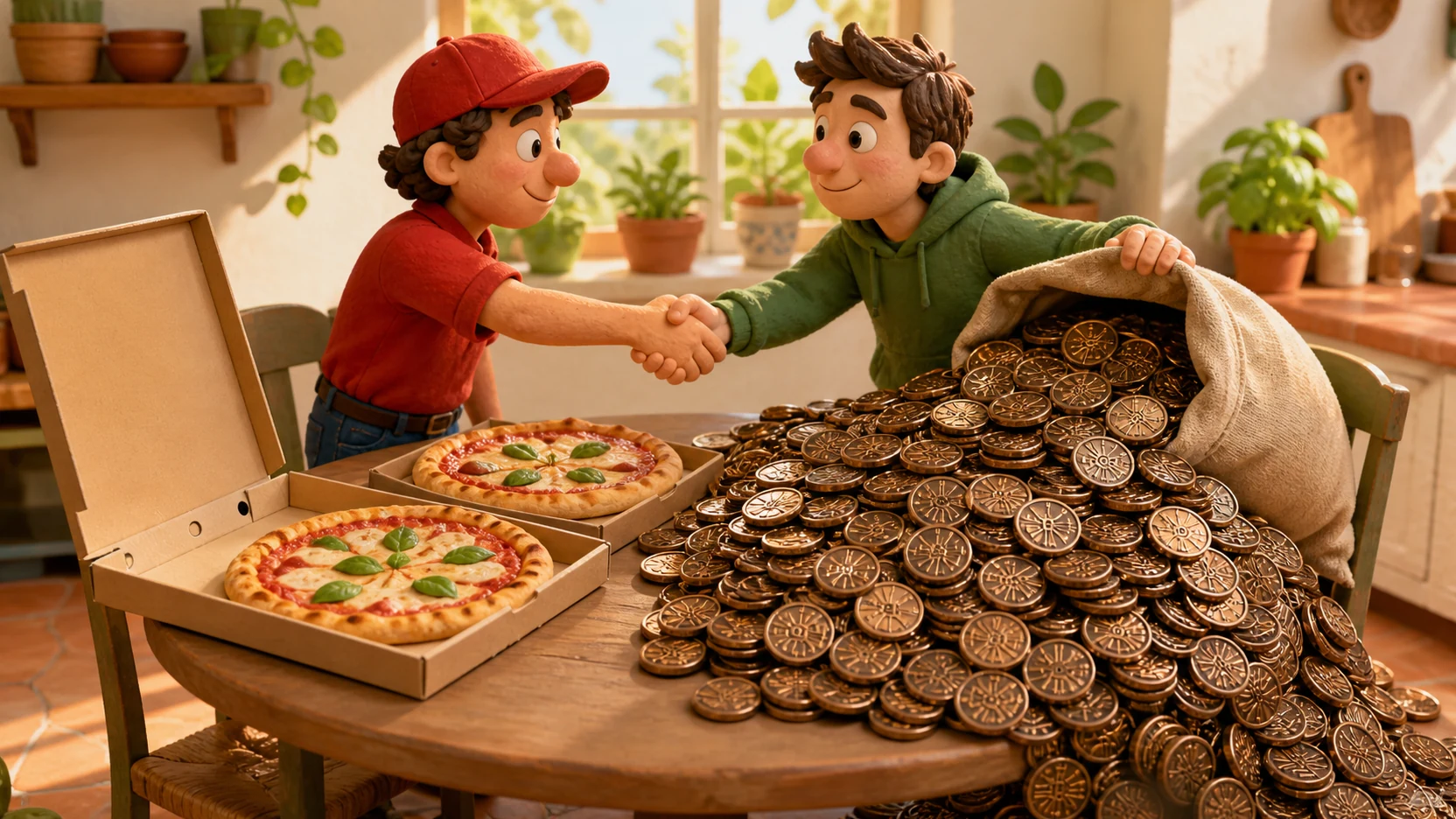
On May 22, 2010, Laszlo Hanyecz exchanged 10,000 BTC for two pizzas in the first widely documented Bitcoin purchase of physical goods. Its modern dollar figures are arithmetic examples, not a claim about today's Bitcoin price.
3-Minute Fast Briefing
- The ParadoxOn May 18, 2010, programmer Laszlo Hanyecz offered 10,000 BTC on Bitcointalk for two delivered pizzas.
- The Turning PointFour days later, user 'jercos' bought two Papa John's pizzas, completing the first physical commercial transaction.
- The LegacyHanyecz, who also pioneered GPU mining, holds no regrets over spending what became hundreds of millions.
Chronological Timeline
Laszlo posts offer on Bitcointalk requesting 2 large pizzas for 10,000 BTC.
Jercos orders 2 Papa John's pizzas to Laszlo's Florida home; 10,000 BTC is sent.
Satoshi asks Laszlo to slow GPU mining to avoid an arms race that edges out casual users.
Global crypto community celebrates the trade that proved digital cash could buy dinner.
1. “Pizza for bitcoins?”: The forum post that made history
On May 18, 2010, Laszlo Hanyecz, a software developer in Jacksonville, Florida, logged onto the Bitcointalk forum and opened a thread titled 'Pizza for bitcoins?'. At the time, Bitcoin was barely sixteen months old, had no listed exchange price, and existed only as an obscure digital plaything among cryptographers.
“I'll pay 10,000 bitcoins for a couple of pizzas.. like maybe 2 large ones so I have some left over for the next day,” Hanyecz wrote. “I like things like onions, peppers, sausage, mushrooms, pepperoni, etc.. just standard stuff no weird fish topping.”
For four days, the offer went unclaimed. Forum members chimed in from Europe asking if they could order via international delivery, while others wondered whether 10,000 BTC—valued at roughly $41 based on fractional mining electricity costs—was worth the effort of calling a pizza parlor.
2. The trade closes and the pizza arrives
On Saturday, May 22, 2010, a 19-year-old student named Jeremy Sturdivant (known as 'jercos' on the forum) in California saw the post and decided to broker the deal. Using his credit card, Sturdivant called a local Papa John's in Florida, ordered two large pizzas, and had them delivered directly to Hanyecz's home.
Minutes later, Hanyecz verified the delivery, posted photographs of his young children reaching for the steaming slices, and transferred 10,000 BTC to Sturdivant's wallet.
It was the first documented commercial transaction where Bitcoin was exchanged for a physical consumer good. An abstract cryptographic token minted on a computer CPU had successfully crossed the digital divide to purchase dinner.
3. How Laszlo mined 10,000 BTC: The GPU mining revolution
Why did Hanyecz have so many bitcoins to spend on lunch? Because he had revolutionized Bitcoin mining. In early 2010, Bitcoin was mined exclusively using standard computer processors (CPUs). Hanyecz, an expert in Apple and Linux graphics drivers, realized that graphics cards (GPUs) were vastly superior at calculating SHA-256 hashes in parallel.
He wrote custom Mac OS/CUDA code that increased his mining hashrate by more than tenfold. He began mining thousands of BTC daily from his living room rig.
When he shared his GPU mining code with Satoshi Nakamoto, the creator was alarmed. Satoshi emailed Hanyecz privately, asking him not to accelerate a GPU 'arms race' so that casual users with regular laptops would not be squeezed out of network participation.
4. The arithmetic behind the $700 million price tag
Over the following decade, as Bitcoin evolved into a global macro asset, Hanyecz's pizza order became the most famous receipt in financial history.
At a Bitcoin price of $70,000, those two pizzas represent a staggering $700,000,000 ($350 million per pie). At $100,000 per BTC, it translates into a cool $1 billion. Yet calculating the transaction through modern hindsight misses the entire point of the experiment.
Without early pioneers like Hanyecz who were willing to treat Bitcoin as actual money and spend it, Bitcoin could never have established a market price, liquidity, or the cultural legitimacy required to become a global store of value.
5. No regrets: The enduring spirit of Bitcoin Pizza Day
In a 2019 interview with CBS's 60 Minutes, Anderson Cooper asked Hanyecz if he stays awake at night regretting the purchase.
“I think that thinking like that is, like, not really good for you,” Hanyecz smiled. “I wanted to do the pizza thing because to me it was free pizza. I got free pizza for contributing to an open-source project. Being a part of Bitcoin's early history was really cool.”
Every May 22, cryptocurrency enthusiasts around the globe celebrate Bitcoin Pizza Day by ordering pizza and reflecting on the humble origins of a monetary revolution. It remains a joyful reminder that value is not born from hoarding, but from the brave first step of exchange.
Key Takeaways for Investors & Builders
Medium of Exchange First
An asset cannot become a store of value without early believers willing to spend it as an experimental medium of exchange.
GPU Mining Disruption
Hanyecz's CUDA GPU mining code increased hashrate by 10x, accelerating the industrialization of proof-of-work security.
The Spirit of Participation
Hanyecz's view was that participating in Bitcoin's foundational experiment was infinitely more valuable than hoarding untradeable numbers.
Connected Stories in this Universe
Explore the chain reaction of historical breakthroughs, blunders, and legends.

1.1 Million Sleeping Bitcoins & The Final Goodbye: Satoshi Nakamoto's Disappearance and Hal Finney's Cryonaut Legacy
1.1M unspent Bitcoins, the Genesis block, and the first recipient Hal Finney — how Satoshi's self-erasure and Hal's ALS battle created the bedrock of decentralized freedom.
Read story →
The $27 Thesis That Bought an Oslo Apartment: The Kristoffer Koch Windfall
A $27 thesis experiment forgotten for four years turned into an $886,000 fortune — the inspiring true story of Norwegian student Kristoffer Koch.
Read story →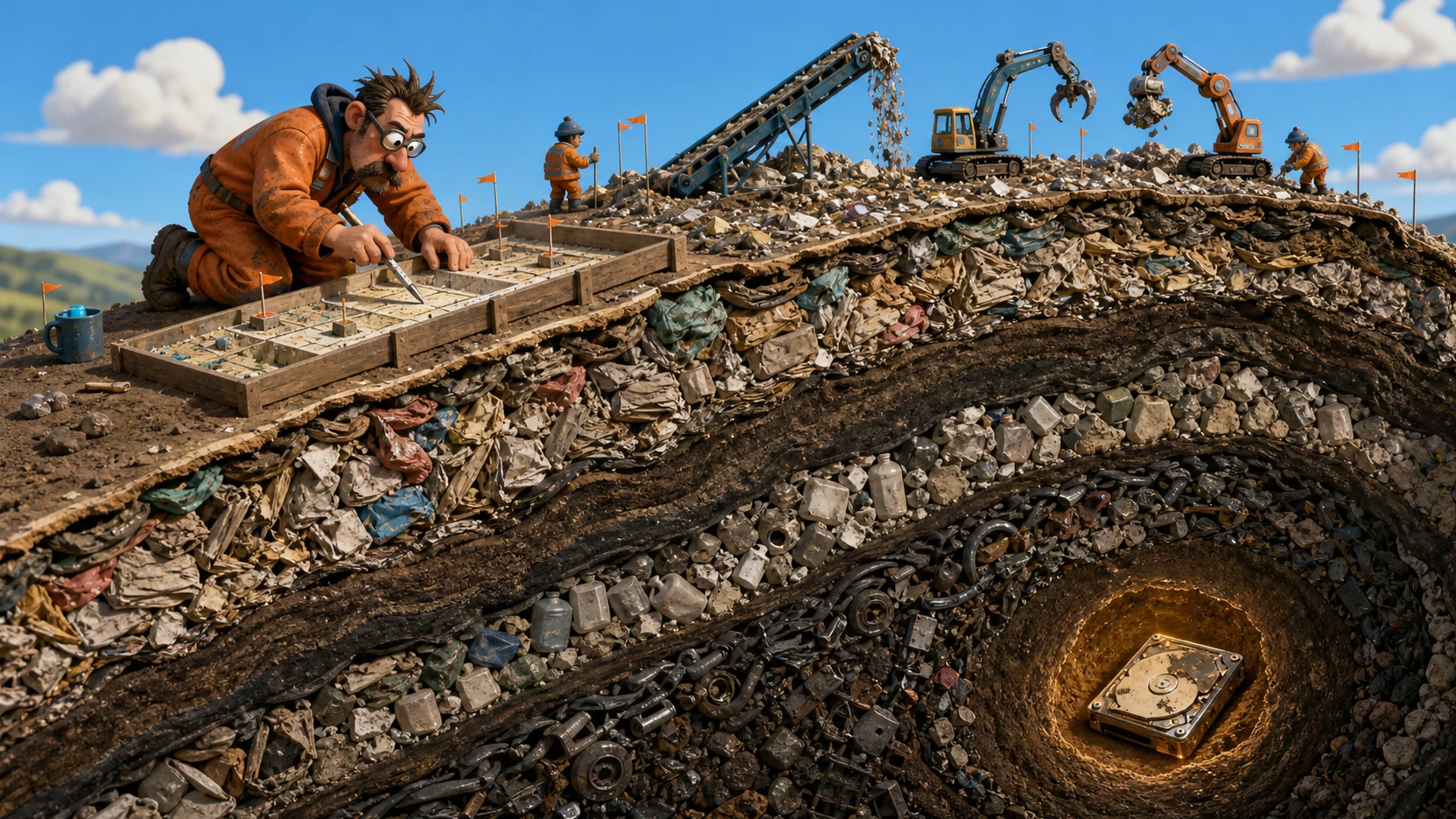
Buried in the Landfill: The 8,000 Bitcoins Tragedy of James Howells
8,000 BTC buried under 100,000 tons of municipal waste — one man's 10-year legal and high-tech battle to unearth a lost digital fortune.
Read story →Sources & References
- [1]Source 1: Blockchain.com: 10,000 BTC Pizza Transaction Ledger Verification (cca75078...)Blockchain.com Explorer · 2010-05-22
- [2]Source 2: Bitcoin Core Source Repository & Historical Genesis CodebaseBitcoin Core Developers · 2010-05-22
- [3]Source 3: Bitcoin Pizza Day: Cultural Milestone and Historical ValuationWikimedia Foundation · 2024-05-22
- [4]Source 4: Pizza for bitcoins?BitcoinTalk · 2010-05-18